Friday, 15 December 2017

Differences between National and International Civil Service

 Though national and international administrations may appear to be similar from a specifically functional vieWpoint, the two differ considerably in terms of source, nature and application of authority The government of a country is representative of its citizens (at least nationally) whereas an international organisation is composed of sovereign, independent states which have voluntarily agreed to come together to pursue certain common objectives.
Secondly, national civil servants deal only with the citizens of their respective states, while international civil servants deal with nation states.
Thirdly, in a nation-state the owers of different branches of government are clearly defined 1n a constitu on, the provisions of which are binding on individual citizens. An international organisation, on the on the other hand, depends for the functioning of its laws virtually on the moral binding of member states to respect its policies as stated 1n the Charter. The executive, legislature and the judiciary in an international organisation are not equivalent in their powers to their national counterparts. There is no executive in the strict sense in an international organisation; certain organisations are allocated Specific duties to carry out in Specific situations by superior policy making organisations, like the General Assembly or the 
what is ICS

Security Council. Most jurists agree that the resolutions and recommendations of the General Assembly (which is the rough equivalent of a national legislature) do not generally impose legal obligations upon member states; similarly, the jurisdiction of the International Court of Justice is narrowly limited and its opinions are not binding, while the judiciary at the national level has a far more extensive and effective jurisdiction and its opinions have a binding force. .
      The primary concern of an international civil service is with the putting into effect of the deliberations and recommendations of international organisations with respect to the promotion of the stated purposes of the respective organisations. The national civil service administers national laws undertaking direct administrative responsibility. 
       A national civil servant administers a single political community, while an international civil servant administers international organisations which represent a series of contracts between many diverse states.
NATIONAL CIVIL SERVICE

       Finally, the service conditions of an international civil service are based on contractual relations, rather than on an obligatory basis, as in the case of a national civil service. The legal relationship between national civil servants and their employer, the state, stands on an entirely different footing, that is, it is subject to the sovereignty of the state as compared to the contracting parties in international employment. The international civil service lacks many features of its national counterpart, such as a ”Central administrative authority, Central recruitment ”control, Verified service conditions, Central appeals machinery,” in spite of the efforts of the ICSAB (International Civil Service Advisory Board) and ICSC (International Civil Service Commission) established to ensure common service conditions for the various UN bodies. 
m
 Characteristics of an International Bureaucracy
Characteristics of an International Bureaucracy 

While focussing on the above differences, the specific characteristics of an international bureaucracy need to be highlighted. The uneven history of the evolution of the international civil service makes a clear definition of international bureaucrats difficult. Suzanne Basdevant has defined international officials in the following manner: ”International officials are persons who, on the basis of an international treaty constituting a particular international community, or by an organ of it, and are under its control to exercise, in a continuous way, functions in the interest of this particular international community, and who are subject to a particular personal status.” Thus, international civil servants are full-time employees of an international organisation, to which they owe their loyalty, and from which they draw their salaries and other benefits.
Bureaucracy has several basic characteritics
The League of Nations Staff Regulations stipulated that the tlons were officials of the Secretariat of the League Nation were exclusively international officials. A similar provision was made in the United Nations Staff Regulations. In accordance With the 
Convention on Privileges and Immunities of the United Nations, the General Assembly of the United Nations, determined that staff members of the UN, other than those who were recruited locally and assigned to hourly rates, were to be considered as‘UN officials. This definition was subsequently modified to include all regularly employed staff members of the UN, except those under contract . A similar  defimtlon 18 used in the Specialised Agencies of the UN.

Tuesday, 12 December 2017

Salient Features of the Organisation of the Secretariat

The Secretariat is headed by the Secretary-General who is the Chief Administrative Officer of the United Nations. In the economic and social fields. he is assisted in carrying out his responsibilities as Chief Administrative Officer by a Director General for Development and International Economic Cooperation. The Secretariat is divided into several major units each of which is headed by an Under-Secretary-General, an Assistant Secretary-General or an official of equivalent level. They direct and manage the functions of the major units under the guidance of the Secretary-General and, wherever called for, of the Director-General. The major units are variously denominated as ”department", “office”, "secretariat" or "centre" (henceforth referred to as departments / office's). The Secretariat in the Political Process: Policy through Administration
Administration is the process of implementing the mandate of policy=malcin; bodies. However, a1 po roles eaVe room for administrative discretion in the application of rules to particular cases. ’
orignal chart of general secretariat


Administration also becomes involved with policy decisions in direct ways Researc studies and reports prepared by secretariat official add to the information base for ; overnment policy: Nearly every international organisation can point to report drafted by expert secretariat personnel that were the basis for subsequent action by policy-making bodies. 
Successful performance of assigned duties by secretariat personnel can lead to requests for more of the same. The first UN peacekeeping force in Palestine had to be built almost from scratch when the Suez crisis arose; but that precedent made a peacekeeping force a logical necessity wherever UN intervened in times of conflicts. On the other hand, ineffective administrative performance may lead to modification or abandonment of programmes. 

SECRETARIAT PARTICIPATION IN DECISION-MAKING
the secretariat evolution

International officials also participate directly in the decisionmaking processes of their governing bodies. Among existing international organisations, the greatest influence is probably exercised by the staff of the World Bank, who not only frame the programme for discussion by its Executive Directors and Governing Board, but generally secure their approval for What the Bank President and his staff recommend. Governments are of course _ closely consulted in the preparation of the recommendations. The UNESCO Secretariat also fixes the agenda and prepares a programme of action for its governing body. Although the UNESCO General Conference is sometimes disposed to modify the programme, the Director-General is undoubtedly the most important decision-maker in the organisation. 
The situation is however quite different in the UN General Assembly, where most agenda items are proposed by member states, or mandated by previous resolutions, and simply compiled by the Secretariat in a preliminary agenda. Although the Secretary-General may suggest additional items, he does not submit a legislative programme, as is done in some other international agencies. However, when legislation involves programmes administered by the Secretariat, the views of the Secretariat may carry weight, especially since the positions of member states are likely to have been solicited in formulating the Secretariat views.
decision-making framework


The Secretary-General is also responsible for preparing the bienning UN budget . His estimates are, for the most part, based on 
the amounts required to carry out programmes already authorised by the policy-making bodies, but the final choice of budget figures involves his discretion. 

Whether or not the secretariat of an international agency has a large role in initiating programme proposals, other avenues of participation in the policy process also exist. Executive heads are usually authorised to take part in formal discussions and debates of agenda items. All UN policy-making organs have provision for hearing the Secretary-General. Other UN officials conduct their own lobbying operations with varying degrees of success. Individual civil servants are often consulted by national officials becauseoftheirexpertiseina subjechand theSecretary-Generalis often consulted if members are seriously considering proposals for new functions or responsibilities for the Secretariat. Secretariat officials also provide their services as storehouses of information on such policy-relevant matters as the conduct of meetings and drafting of resolutions. 

Friday, 8 December 2017

The Limitations of the International Court

 The record of the International Court at first sight will perhaps not seem impressive. There is only a limited category of cases that are brought before it. Jurisdiction is entirely voluntary: either a nation accepts it for the particular case concerning it, or it enters into a treaty providing for a settlement of disputes by the Court, or it gives a general undertaking to accept the Court’s jurisdiction for a particular category of cases in relation to other nations which have likewise accepted it. In practice, both the number and importance of cases taken to the Court have diminished rapidly so that now less than one case a year is heard which is often not of major importance. In a number of cases the Court has had to find that it has no jurisdiction. Over one of the most important case (the Corfu Channel) the party found responsible for the dispute refused to comply with the Court’s judgement. In another important case (the South-West Africa case) the Court originally refused to pass judgement in the form in which it had been presented. None of the kind of cases that have most frequently led to the use of force among nations have been taken to the Court at all. On issues where international law can be most uncertain or most contested, and which most often give rise to war the limits of permissible external intervention in civil war situations, political support for revolutionary movements, the right of nationalisation of international waterways or other resources the rulings of the International Court have not been brought into play at all. 
legal structure of international court of justice

A still more contentious issue concerns the lack of enforcement power available to the Court to secure compliance when it does make judgements. The Security Council can, under Article 94, decide upon measures to be taken to give effect to ”the judgements" of the Court, but it has never done so. This leads to a situation where many doubt the utility of bringing disputes to the Court, wondering (with some reason) whether the other disputants involved will accept its jurisdiction, and comply with its judgements. 

There is no evidence that even if jurisdiction was guaranteed, governments would be any more willing to move to the Court. The failure to use the Court is not so much the result of inadequate prior commitment as it is due to a lack of agreement among states regarding what the Court can achieve, and to a belief that political remedies may be a better way to pursue political causes. 
internationak criminal couer cintributions 2008

All this leads some to doubt if the Court has any worthwhile role to play in international relations. It is true that the international Court has not yet provided the means to establish a wholly new world order based on law and justice. But it would have been foolish to expect this. Although the judgements of the Court, and the conventions drawn up by the Commission, have been mainly on relatively non-controversial subjects, this does not mean that they have been of no significance. The slow accumulation of international judgements and law can eventually contribute to the establishment of a more lawful world community in which mutual obligations are recognised. 
But for this to happen certain conditions have to be fulfilled. The first condition concerns the substance of the law applied. At present, a great deal of international law appears to many governments of the world to be a code made in the first world primarily for itself. The peoples and governments of other areas have played little part in building it. It can be represented as ideological legitimacy for the status quo, designed to uphold the existing distribution of power among states.
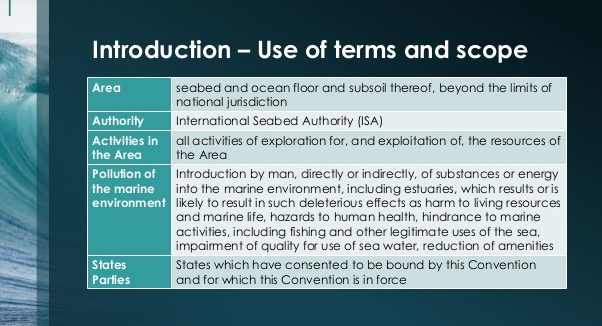
introduction- use of terms and scope

 Some effort has been made to counteract such attitudes. But ultimately the only way in which confidence in the judgements of the Court and in the drafting of new conventions can be increased is to make efforts to convince those from developing countries that the law applied provides for change as well as stability, reflects a sense of justice felt in the world as a whole, and does not necessarily work against the interests of the have-nots. Like any other law, international law must take account of the changing needs of developing societies if it is to retain the confidence of the world community. Secondly, this means that the Court in its judgements may be required more often explicitly, to take account of considerations of equity, as well as of prescriptive rights. At present the court, under Article 38(2) of its statute, cannot take account of equity as against the established law. If the Court is to play an important role in an evolving world society, it must be concerned with equity as well as legal rights. 

Advisory Opinions 
Advisory proceeding

Besides these 'contentious cases', the Court has also given a number of advisory opinions which have in some cases been of far reaching importance. Some of them related to the UN's own affairs. A particularly important one was that relating to the costs of peacekeeping forces. The Court advised that peacekeeping costs could be reckoned as normal expenses of the organisation for the purpose of Article 19. Though this was overwhelmingly accepted by the Assembly, the UN finally decided not to apply Article 19 as allowed by the advisory opinion. The Court gave an opinion in the early years of the organisation on disputes concerning admission into the UN confirming that no admission could be made without a Security Council recommendation. On a case arising out of the death of Count Bernadette, the UN Mediator in Palestine in 1948, the Court ruled that the UN had the capacity to bring a claim for reparations for the damage caused to the organisation as a whole. The Court also advised during the McCarthy period, when US staff were being dismissed, that the UN was not entitled to refuse to honour awards of compensation made by the UN Administrative Tribunal to staff whose contracts had been prematurely terminated. Finally, it ruled that Liberia and Panama should be accepted by IMCO for the purposes of membership of its Council as being among “the largest ship owning nations”. 

Wednesday, 6 December 2017

The World Court-Composition and Functions

 The International Court of Justice is the principal judicial organ of the United Nations. Its statute is an integral part of the UN Charter. The Court is open to all states which are parties to its statute, and automatically includes all members of the United Nations. A state which is not a member of the UN may become a party to the statute on conditions determined in each case by the General Assembly upon the recommendations of the Security Council. All countries which are parties to the statute of the Court can be parties to cases before it. Other states can refer cases to it under conditions laid down by the Security Council. In addition, the Security Council may recommend that a legal dispute be referred to the Court. Both the General Assembly and the Security Council can ask the Court for an advisory Opinion on any legal question; other organs of the United Nations and the specialised agencies, when authorised by the General Assembly, can ask for advisory opinions on legal questions within the scope of their activities. 
THE WORLD COURT-COMPOSITION AND FUNCTIONS

Jurisdiction

The jurisdiction of the Court covers all questions which states refer to it, and all matters provided for in the United Nations Charter or in treaties or conventions in for'ce. States may bind themselves in advance to accept the jurisdiction of the Court in special cases, either by signing a treaty or convention which provides for referral to the Court or by making a special declaration to that effect. Such declarations accepting compulsory jurisdiction may exclude certain classes of cases. In accordance with Article 38 of its statute, the Court, in deciding disputes submitted to it, applies:
  1.  International conventions establishing rules recognised by the contesting States; 2. International custom as evidence of a general practice accepted as law; '
  2. The general principles of law recognised by nations; and 
  3. Judicial decisions and the teachings of the most qualified publicists of the various nations, as a subsidiary means for determining the rules of law; 


Membership 

The Court consists of 15 Judges elected by the General Assembly and the Security Council, voting imlopendently. 'lhey are chosen on the basis of their qualifications, not on the basis of nationality, and care is taken to ensure that the principal legal systems of the world are mpresonted in the Court. No two Judges can be. nationals of the same state. The Judges serve for a term of nine years and may be reelected. “they cannot engage in any other occupation during their term of office. 
   The Court normally sits in plenary session, but it may also form smaller units called chambers if the parties so request. Judgements given by chambers are considered as rendered by the full Court. 
Membership


Judicial Settlement of Disputes 

The primary United Nations organ for the settlement of disputes is the International Court of Justice. Since its founding in 1946, states have submitted 119 cases to it, and international organisations have requested 23 advisory opinions. Most cases have been dealt with by the full Court, but since 1981 four cases have been referred to special chambers at the request parties.

The World Court, as it is popularly known, has made scores of judgements on international disputes involving economic rights, rights of passage, the non-use of force, non-interference in the internal affairs of states, diplomatic relations, hostage-taking, the right of asylum and nationality. Countries bring such disputes before the Court in search of an impartial solution to their differences. By achieving a peaceful settlement on questions such as land frontiers, maritime boundaries and territorial sovereignty, the Court has often helped to prevent the escalation of disputes. 
  Judicial Settlement of Disputes

In 1992, Libya brought two cases ~one against the United Kingdom and one against the United States concerning the interpretation or application of the convention for the Suppression of Unlawful Acts against the Safety of Civil Aviation, arising out of the crash, in 1988, of Pan American flight 103 at Lockerbie, Scotland. The cases are still pending before the Court. 

In 1993, Bosnia and Herzegovina brought a case against the Federal Republic of Yugoslavia concerning the application of the Convention on the Prevention and Punishment of the Crime of Genocide. The Court called upon the parties to prevent further commission of the crime of genocide and further aggravation of the dispute. In 1996, the Court rejected the objections to its jurisdiction raised by Yugoslavia; the case is still, pending before the Court. 

The Court in 1996 rejected objections by the United States to its jurisdiction in a case concerning the destruction of Iranian oil platforms by United States warships, and found that it had jurisdiction to consider some of Iran’s claims.

THE SECRETARIAT

The Secretariat is one of the six principal  organs of the United Nations, the others being; the General Assembly, the Security Council, the Economic and Social Council, the Trusteeship Council and the International Court of Justice. It came into being on February  1, 1946, when the first Secretary-General of the UN was appointed by the Assembly. The Secretariat . provides se 'ces to the legislative organs of the UN, namely, the General Assembly, the Security Council, the Economic and Social Council an the Trusteeship Council, including their subsidiary bodies. The legislative organs adopt resolutions  and action programmes for the betterment of many aspects of life, such as peaceful settlement of disputes between states, achievement of independence, right to self-determination and other human rights of all peoples of the world, improvement of socioeconomic conditions in all countries, international cooperation in providing relief to victims of conflict and natural disasters and adoption of regulations for safeguarding of the environment, exploitation of marine resources and promotion of activities in outer space The resolution; and action programmes are the outcome of deliberations of representatives of member states in those organs and subsidiary bodies. The Secretariat provides the services that facilitate those deliberations and carries out that part of the work programme which is assigned to it. The work of the secretariat is carried out by the staff of the UN who are appointed by the Secretary-General. The resources it requires for carrying out the UN programme of work are provided by the member states. The Secretariat is located at the Headquarters of the UN in New York. It has branch offices at Geneva, Vienna and Nairobi. It also includes  the regional commission’s secretariats at Addis Ababa, Baghdad, Bangkok, Geneva and Santiago. Its broad functions in various fields with which the United Nations is concerned, with some variations from field to field, are as follows: 
SECRETARIAT


  •  Producing reports and other documents containing information, analyses, historical background, research findings, policy suggestions, etc. ., that facilitate the deliberations and decision-making by the legislative organs and their subsidiary bodies; 
  • Providing secretariat services to the legislative organs and their subsidiary bodies (e.g., providing secretaries for committees, councils and commissions; assisting in planning the work of the sessions, in conducting the proceedings and in drafting reports);
  • Providing meeting services (interpretation, verbatim reporting and precis-writing services) to the legislative organs, in accordance with the policies adopted by the General Assembly;
  •  Providing editorial, translation and documents reproduction services for the issuance of United Nations documents in the different working languages, in accordance with the policies adopted by the General Assembly; 
secretary general

  • Conducting studies and providing information that answer to the priority needs of Governments of member countries, particularly of the developing countries, in meeting challenges in various fields;
  • Producing statistical publications, information bulletins and analytical work which the General Assembly has decided should be issued by the United Nations in the field concerned,
  • Organising conferences, expert group meetings and seminars on topics of concern to the international community, as authorised by the legislative organs. (h)Providing technical assistance to the developing countries, i.e., providing experts, resources and/ or materials to countries, offering training opportunities to officials of countries by way of fellowships to universities and other institutes and inviting them to seminars organised by the United Nations;
secretariat-function,composition,working

  • Undertaking or servicing missions to countries, areas or locations as authorised by the General Assembly or the Security Council.
  • Arranging for dissemination to the public, of information on United Nations activities and decisions; 
  • Providing the programme planning, financial, personnel, legal, management and general services that are essential for the rational selection of work items and allocating resources among them and for the effective, economic and efficient performance of the services and functions of the Secretariat, within the legal framework of regulations, rules and policies adopted by the General Assembly. 

Monday, 4 December 2017

THE INTERNATIONAL COURT OF JUSTICE

 After World War I it was widely hoped that the rule of law might be made a substitute for war. All agreed under the League Covenant to settle ”disputes” by peaceful means. Three alternative methods were provided for this purpose. Those disputes that were regarded as purely political would be submitted to the League Council. For disputes that were partly legal, provision was made for their submission to arbitration, through one of the arbitral arrangements already established, or, later, to a procedure known as ”conciliation”, under less formal legal procedures. Finally, for disputes that were purely legal, a wholly new procedure was established, to be known as ”judicial settlement”. This would be undertaken by a new body established for the first time the Permanent International Court of Justice which was set up at The Hague.


Many doubted whether any clear distinction could be drawn between ”legal” and ”political” disputes. There were two oPPOSite views on this subject. Some fervent believers 111 international law mainly lawyers, held that there was no dispute, however ”political”, which could not be resolved according to the principles and procedures of international law. Politicians, on the other hand,
less firmly convinced, tended to maintain that for many issues the traditional methods of diplomacy or the newly established ' League of Nations could provide solutions. Others held tha were no that there were no purely legal questions at all. And it quickly came to be established that the most ”important” issues were political rather than legal, and so ”unfit for decision by the Court". 
WORK OF THE INTERNATIONAL COURT OF JUSTICE

In consequence, the Court was excluded from hearing those issues that were most likely to lead to war. Most of the disputes or cases which ultimately led to war, or at least its justification the treatment of Japanese citizens in Manchuria, the frontier dispute over Wal-Wal between Italy and Ethiopia, the demilitarisation of the Rhineland, the treatment of German minorities in Czechoslovakia and Polandwere never even considered as possible items for submission to the Permanent International Court of Justice. 
        But the general belief that law could be made a substitute for war led to further attempts to strengthen the legal machinery that had been established. It was proposed that nations should give a solemn undertaking that in all disputes of a legal character they would accept the jurisdiction of the Court if these were submitted to it by nations which had given a similar undertaking. Because of the opposition of some nations, especially Britain and one or two Commonwealth countries, this proposal was changed so that both the nations concerned needed to have given their prior consent to the Court’s “compulsory” jurisdiction. This was the famous Optional Clause to which governments might voluntarily accede. Even then many nations did not accede to it. Or they attached to their acceptance so many reservations, excluding all disputes of a particular kind, that much of its value was lost. 

Jurisdiction of the Permanent Court 
structure of international court of justice

The Court gave its judgement on questions involving the interpretation of international law, treaties and other mutual obligations. However, it had jurisdiction only over such disputes as members were willing to submit to it. A few countries however agreed in advance to submit all their disputes to the Court for settlement. Others reserved the right to submit to the Court only those cases which they liked. The establishment of the Permanent Court of International Justice was the most important effort made thus far to establish an international judicial tribunal for the adjudication of controversies between states. During its existence the Court tried 65 cases and handed down 32 judgements, 27 advisory Opinions and several hundred orders. Thus, it created a body of legal precedents of great utility for the solution of future international cases of justiciable character. 
ICJ Statute Art. 36

After World War II, it was agreed to reconstitute the Court to make it an integral element of the United Nations system. In April 1945, even before the end of the war, a Committee of Jurists was invited by the US Government to meet in Washington and make recommendations for a new statute for the Court. At the San Francisco Conference, it was accepted that all members of the UN should automatically become parties to the statute of the new Court. It was renamed. The adjective ’permanent’ was dropped. The Court was made an organ of the UN (its predecessor had been separate from the League). Its statute became annexed to the Charter. 

The statute was redrafted. Every member of the UN had to undertake to comply with the decisions of the Court. The Optional Clause was reproduced in Article 36 of the statute; parties were able to declare that they recognised ”as compulsory ipso facto and without special agreement, in relation to any other state accepting the same obligation”, the Court’s jurisdiction over certain types of legal disputes. It was laid down in the Charter that the Security Council could, at the request of one party to a dispute, ”decide on measures to be taken to give effect to ”a judgement of the Court”. 

Saturday, 2 December 2017

The UN Role in Decolonisation

      The Trusteeship Council was recognised from the beginning as being unfavourable for a radical attack upon colonialism, due to the built-in advantages granted to conservative forces by the Charter provisions limiting the system to dependent territories voluntarily designated by their possessors and establishing a balance in the Trusteeship Council between the administering authorities and other states elected to membership.
      The anti-colonial movement which gained momentum after World War II, gradually launched a campaign to expand the trusteeship implications of Chapter XI, and succeeded in establishing the principle that the administration of all non-self-governing territories should be subjected to international examination and criticism in somewhat the same manner as the administration of Trust areas.
THE UNITED NATIONS ROLE IN DECOLONISATION

       The major strategy of the anti-colonial bloc has been to convert the General Assembly, the organ in which its relative voting power is greatest and has steadily increased, into a forum for the consideration of all issues relating to colonialism, whether they are specifically concerned with the Trusteeship system, the Declaration regarding non-self-goveming territories, or demands for national self-determination. An aggressive and broadly successful campaign was waged to override claims of domestic jurisdiction, restrictive interpretations of the commitments under Chapter XI, and demands that the General Assembly respect the delegation of functions to the Trusteeship Council and to
subordinate organs established by itself.

        As the Assembly became more and more clearly an instrument of anti-colonial forces, it progressively asserted its competence to reject positions taken by states possessing colonies, claiming for itself the authority to direct the decolonisation process. Its Resolution 1514 (XV), referred to before, was a veritable Emancipation Proclamation for dependent peoples. The Assembly supported the general thesis that all peoples have a right of national self-determination. It has to a very considerable extent functioned as the institutional vehicle for the elaboration and application of the principle that international organisation has a broad mandate to intercede on behalf of dependent peoples whenever they or their supporters find themselves at odds with colonial powers. In brief, the Assembly became the means for nullifying the provisions of the Charter which seemed to guarantee that the United Nations would not adopt a radical attitude toward colonialism, as it had previously been used to cancel the Charter agreement that the UN would not serve in basic political matters as an agency of international opposition to the policy of one of the Big Five.

The Special. Committee on decolonisation is charged with bringing to self-government or independence, 17 non-self-governing. governing territories-most of which are small island states. They are what is left of an original list of 72 territories voluntarily submitted by United Nations member states as non-self-governing in accordance with Article 73 of the United Nations Charter.
     One of the most important tools of the Special Committee in fulfilling its mandate is its annual regional seminars, held since 1990 in either the Pacific or Caribbean region, generally in May, during the week of solidarity with peoples of the All Colonial Territories Fighting for Freedom, Independence and Human Rights. The fact that they take place in the geographical and cultural regions where the territories are located adds an important contextual dimension to the discussion. The seminars invite members of the Special Committee, other interested member states, the administering powers (France, Portugal, United Kingdom, United States), representatives of non-self governing territories, which allow for focused and frank discussions on decolonisation and a lively exchange of views on a variety of issues of concern to the peoples of the territories.
main bodies of DECOLONISATION

The Declaration of the Second Decade contained in the General Assembly Resolution 55/146 represents a renewed commitment of the international community to resolve the remaining colonial situations. The Special Committee in its new approach following the resolution has decided to develop work plans with specific targets for the decolonisation of the Territories on a case-by-case basis. This approach has been endorsed by the administering powers in a climate of greater cooperation between them and the Special Committee.Decolonisation is one of the great revolutions of our century. It was brought on by forces that were neither generated nor controlled by international organisations. But the United Nations has contributed to the speed and direction of the movement and, in some instances at least, has helped to promote a more peaceful transition to independence and self-government. Since 1945 the UN has provided a forum where anti-colonial spokesmen could articulate their position; it greatly expanded the principle of international accountability; and it developed more effective instruments for international supervision of colonial administrations. Above all, it gave an element of legitimacy to independence movements everywhere in the world. For all practical purposes, the Trusteeship Council can be wound up now. It has been rendered redundant following the completion of its mandate.